
Shift from Aggressive Scaling to Sustainable Business Models
I’ve watched too many founders chase the rocket-ship story only to watch it explode mid-flight.
Anúncios
Shift from aggressive scaling to sustainable business models isn’t just another buzzword cycle—it’s the quiet realization, after a string of high-profile flameouts, that running full speed toward “bigger” doesn’t always mean “better.”
Continue reading the article!
Summary of Topics Covered
- What Does the Shift from Aggressive Scaling to Sustainable Business Models Actually Mean?
- Why Is Everyone Suddenly Talking About It in 2026?
- How Do Sustainable Models Actually Operate Day-to-Day?
- What Real Gains Come from Making the Switch?
- Two Stories That Show the Shift in Motion
- Common Questions Founders Are Asking
What Does the Shift from Aggressive Scaling to Sustainable Business Models Actually Mean?
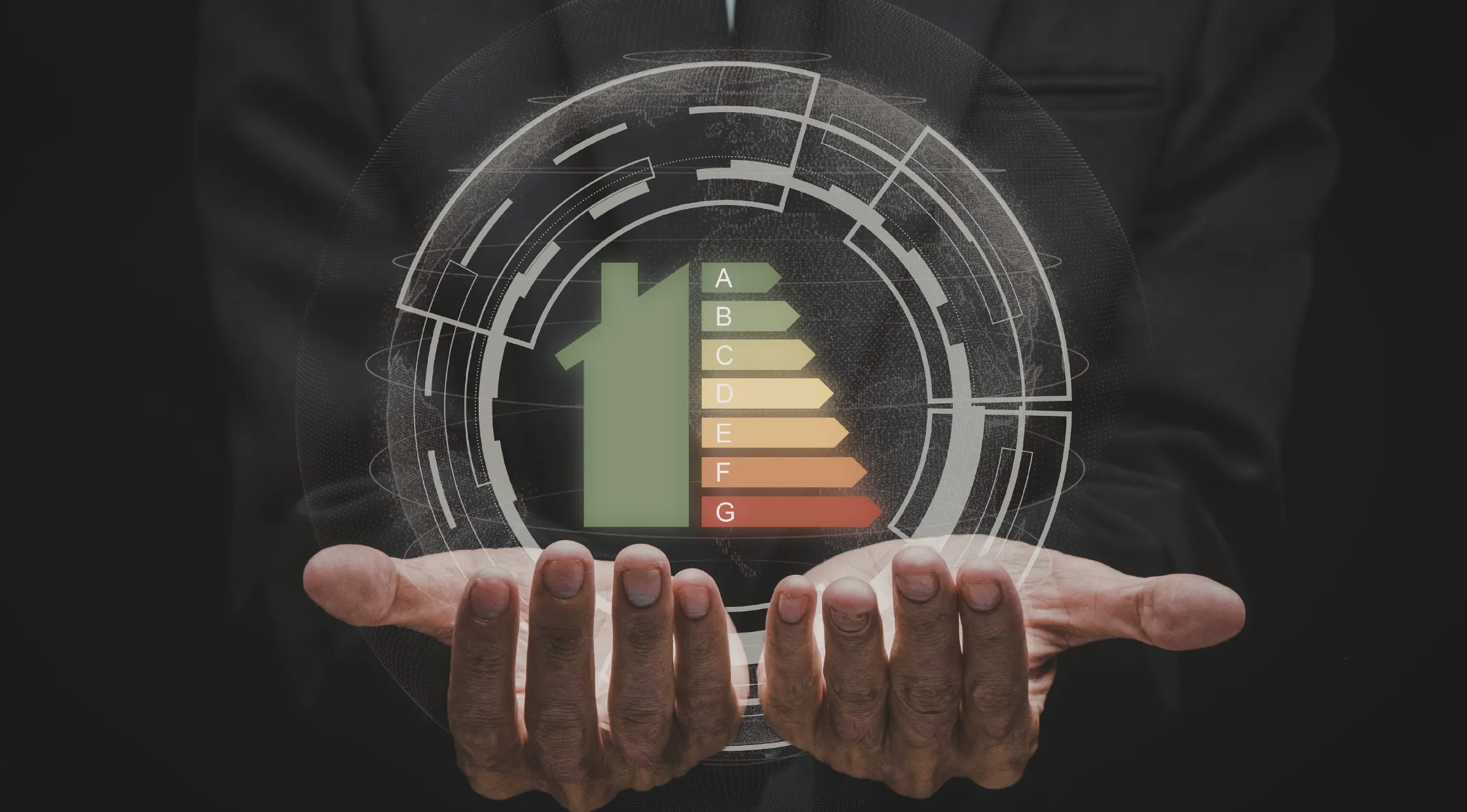
Aggressive scaling used to be the only gospel worth preaching: raise big, hire faster than you can onboard, expand into every market that blinks, burn cash like it’s infinite.
Anúncios
The shift from aggressive scaling to sustainable business models is the opposite reflex—choosing deliberate steps over sprints, profitability over headlines, endurance over spectacle.
It’s not about stopping growth. It’s about refusing to treat growth as the only acceptable direction.
Founders are starting to ask whether a company that can’t survive without another $50M round is actually a company or just an expensive performance art piece.
There’s a strange relief in admitting that. The old narrative sold us immortality through velocity. The new one quietly suggests that maybe breathing room is the real competitive advantage.
++ How AI Regulation Is Affecting Small and Medium Enterprises
Why Is Everyone Suddenly Talking About It in 2026?
The macro backdrop is brutal and unforgiving.
Interest rates haven’t crashed back to zero, Series A checks are smaller and come with far more strings, and the AI gold-rush fever is breaking—leaving behind eye-watering compute bills and a lot of very quiet boardrooms.
Venture funds that once wrote term sheets on vibes are now demanding paths to breakeven within 18–24 months.
++ Franchise Agreements Under Scrutiny: Clauses That Matter Most in 2026
Layoffs that started as “restructuring” in 2023 have become structural. Burnout isn’t an anecdote anymore; it’s infrastructure.
And honestly, a lot of founders are just tired.
They’ve lived the myth long enough to see how fragile it is. Why keep sprinting when the finish line keeps moving—and half the track is on fire?
++ The Connection Between Credit Health and Business Growth
How Do Sustainable Models Actually Operate Day-to-Day?
The machinery looks deceptively simple. Every new hire has to tie to revenue within a quarter or two.
Marketing budgets live or die by customer lifetime value, not vanity metrics.
Product roadmaps shrink to the handful of features customers are actually paying for right now.
Cash is treated like oxygen, not confetti. Teams run leaner, which forces ruthless prioritization. When you can’t just throw bodies and dollars at a problem, you get strangely creative about solving it.
Tech becomes a scalpel instead of a sledgehammer. AI trims fat from operations rather than powering moonshot experiments.
The rhythm slows, but the direction sharpens. Growth happens because demand pulls, not because ego pushes.
Here’s how the two worlds stack up side by side:
| Dimension | Aggressive Scaling | Sustainable Models |
|---|---|---|
| Primary fuel | Venture capital | Operating cash flow |
| Success North Star | Valuation / ARR multiple | Positive unit economics & retention |
| Team size philosophy | Hire ahead of the curve | Hire behind proven need |
| Risk signature | Binary (unicorn or zero) | Graduated (manageable drawdowns) |
| Founder stress curve | Peaks early, crashes hard | Lower amplitude, longer horizon |
What Real Gains Come from Making the Switch?
The most obvious win is survival. Companies stop living one funding round away from oblivion.
When the next downturn hits—and it always does—they aren’t forced into fire sales or mass layoffs.
There’s a quieter gain too: clarity. Without the constant pressure to “10x everything yesterday,” teams can actually think. Product decisions get sharper.
Customer relationships deepen because support isn’t an afterthought. Innovation stops being theatrical and starts being useful.
A 2025 longitudinal study tracking 1,200 early-stage founders found that those who delayed aggressive expansion past $3M ARR reported 62% higher personal well-being scores and 41% lower intention to exit the company within three years.
The data isn’t surprising once you’ve lived both sides.
Two Stories That Show the Shift in Motion
Look at what happened to a consumer hardware brand in Austin—call them Lumora.
They raised a $42M Series B in late 2023 on the promise of dominating smart-lighting retail.
By mid-2025 they were bleeding $1.8M a month, supply chain snarled, and inventory was rotting in warehouses.
Instead of doubling down, the founders cut 60% of SKUs, refocused on direct-to-consumer subscriptions, and slashed burn to $220k.
Revenue dipped 35% short-term but turned positive in Q4 2025. They’re smaller, quieter, and—for the first time—profitable.
Contrast that with a B2B SaaS tool out of Lisbon, FlowTrace. They spent 2024 acquiring users at $180 CAC to chase a $100M ARR narrative.
Churn was ugly, margins negative. In early 2026 the CEO sent a memo titled “We’re Done Growing Sideways.”
They raised prices 22%, killed low-value features, and shifted sales to high-touch enterprise deals. ARR growth slowed from 180% to 38% YoY, but gross margins jumped from 41% to 78%.
The valuation conversation changed from “how fast can you grow?” to “how defensible is this cash machine?”
It’s like the difference between strip-mining a mountain and tending an orchard. One gives you a spectacular heap for a season; the other keeps bearing fruit for decades.
Common Questions Founders Are Asking
Here are the questions that keep coming up in founder chats right now:
| Question | Straight Answer |
|---|---|
| Does this mean I have to stop growing? | No. It means growth has to pay for itself instead of borrowing tomorrow’s money. |
| How long does the transition usually take? | 9–18 months if you move decisively; longer if you try to please everyone. |
| Will investors hate me for slowing down? | Some will. The ones worth keeping will ask to see your unit economics first. |
| Can bootstrapped companies still do this? | They’re usually already living it—they just didn’t have a name for it. |
| What’s the biggest internal resistance? | The team’s identity is often tied to being “fast.” Unhooking that takes time. |
If you want to dig deeper, these pieces are worth your time right now:
++ Johann Yang-Ting — The Scaling Trap (2026 update)
++ TechCrunch — What 2026 Looks Like for Climate & Deep Tech Investors
The shift from aggressive scaling to sustainable business models feels less like a strategy pivot and more like waking up from a fever dream.
The view is quieter, the stakes feel heavier in the short term, but the ground under your feet finally stops moving. For a lot of us, that’s starting to look like freedom.
